
Total Knee Replacement
Total knee replacement is performed primarily to treat arthritis of the knee joint, most commonly osteoarthritis. The aim of the operation is to reduce pain, improve function, and for many people, significantly enhance overall quality of life.
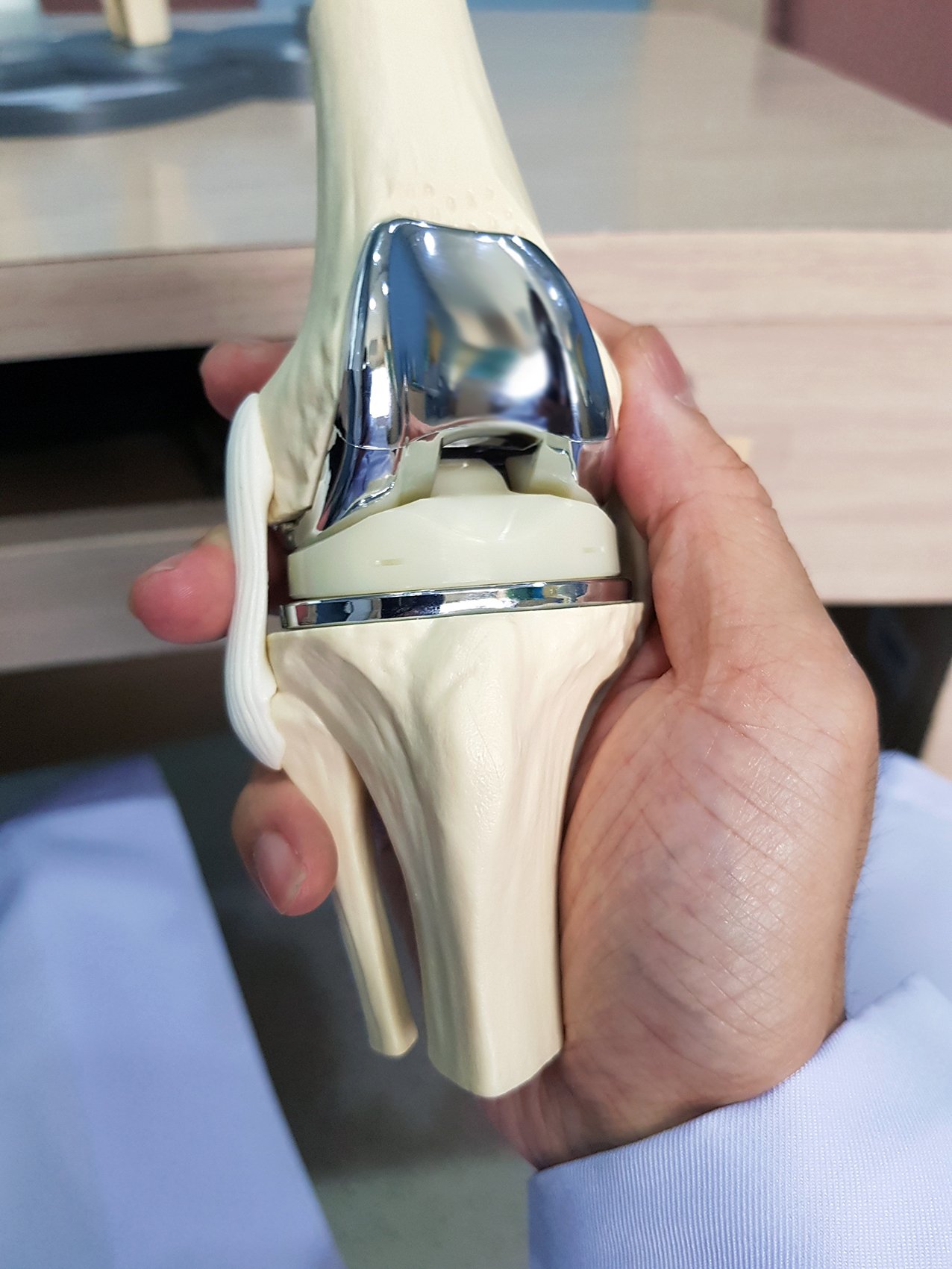
During surgery, the damaged joint surfaces are removed and replaced with artificial components made of metal and plastic, which are secured to the bone using cement.
Most patients feel generally comfortable by around 4 weeks from surgery, feel mostly recovered by 3-4 months, and continue to regain subtle improvements for up to 12 months.
Immediately after surgery
After the operation, you will be taken to the recovery room, where staff will monitor you as you wake from the anaesthetic. You will then return to your hospital room.
Early mobilisation is important. On the day of surgery or the following morning, a physiotherapist will guide you through exercises to begin your recovery. Continuing these exercises in hospital and at home is essential to maximise your result and prevent stiffness.
Patients typically stay in hospital for around five days before returning home or transferring to a rehabilitation facility. A rehabilitation coordinator will discuss your options during your admission.
You will also be taught safe techniques for everyday activities such as bending, sitting, and using stairs.
Mobility and walking aids
You will initially use two crutches or a frame until you can safely progress to one crutch and walk without a limp.
Typical timeline:
Two crutches: approximately 3–4 weeks
One crutch (opposite hand): 4–6 weeks
Caring for your wounds
Your dressing must remain clean, dry, and intact for the first two weeks.
Wash but do not to get the dressing wet.
If the edges lift, tape them down.
A small amount of blood staining is normal.
You may shower but avoid baths or swimming until four weeks after your operation.
Swelling in the knee and leg is expected—rest, elevate, and ice the knee to help reduce it.
Mr Patten will advise what type of stitches you have. Some require removal at around two weeks; others dissolve on their own.
Managing pain after surgery
Pain is a normal part of the healing process and will gradually improve.
In the early days:
rest and elevate the leg
apply ice regularly
take pain relief as prescribed
You will be discharged with pain medication. For ongoing pain management, please arrange a review with your GP.
If you are worried about your level of pain, contact our rooms for reassurance and to rule out rare complications.
Recovery timeline
4 weeks: generally comfortable
3 months: mostly recovered
12 months: knee may feel fully “normal”
Returning to work
Desk‑based work: 3–4 weeks
Manual or labour‑intensive work: 6–8 weeks
Driving
Right knee replacement: approximately 6 weeks
Left knee replacement: 3–6 weeks (depending on manual vs automatic car)
Dental work
Before any invasive dental work (fillings, extractions, etc.), advise your dentist that you have a joint replacement, as antibiotic cover is recommended. Your dentist will follow their own antibiotic protocol.
You may not need antibiotics for a routine scale and clean.
Risks and complications
Complications are uncommon but can include:
superficial wound infection
blood clots
persistent knee pain.
Rare complications include:
injury to nerves or blood vessels
infection within the joint.
95% of knee replacements last at 20 years. However, over time a knee replacement may:
wear out
come loose
experience a fracture of the bone around the implant.